AAT Wishes Its Readers a Happy World Competition Law Day

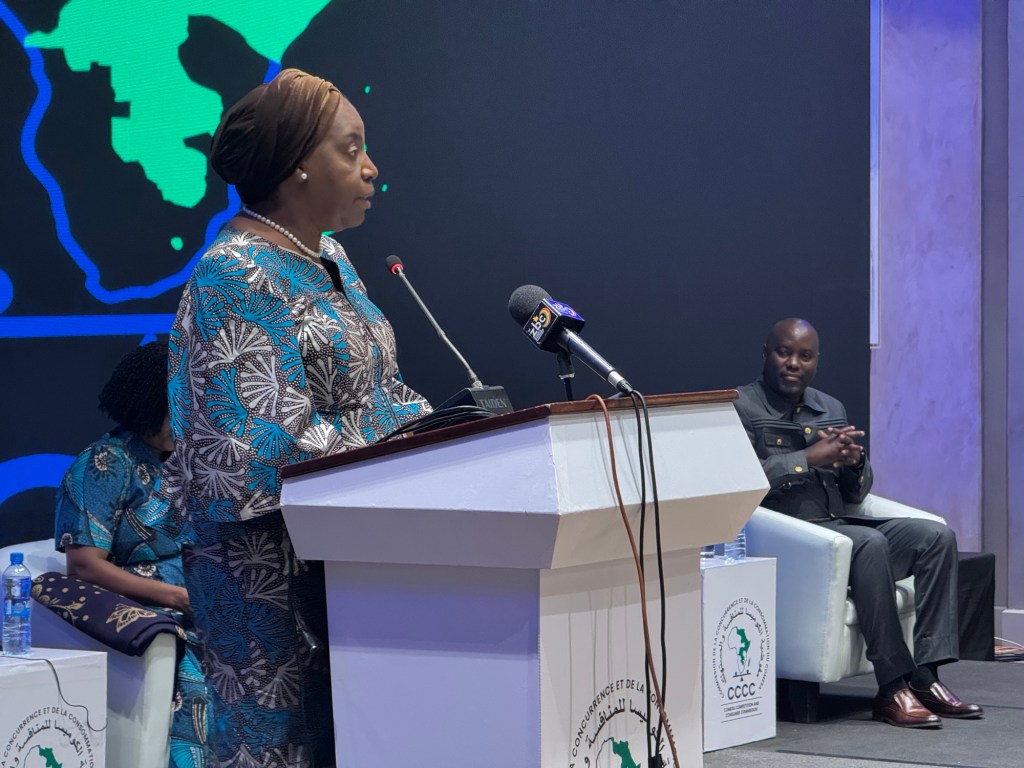
Marking the adoption of the United Nations’ “Multilaterally Agreed Equitable Principles and Rules for the Control of Restrictive Business Practices” 45 years ago on Dec. 5th, today’s International World Competition Day is celebrated around the Globe and particularly in Africa, where leading agencies like the COMESA Competition Commission have observed the commemorative event for years, including this year by meeting with the Malawian CFTC leadership.

On this occasion, AAT wishes everyone a safe and happy holiday season…

Safeguarding Market Integrity and Consumer Welfare: Reflections on the CCC’s 2024 Annual Report

By Megan Armstrong

The COMESA Competition Commission (“CCC”), released its 2024 Annual Report on 23 July 2025, outlining a narrative of both increased institutional maturity and a growing assertiveness in market regulation. This, against a backdrop of economic turbulence such as regional inflationary pressures, tightened global credit conditions and slowing GDP growth in Member States, the CCC pressed forward, making notable strides in their enforcement, policy advocacy and institutional development.

M&A Activity and a shift in sectoral dynamics

Dr. Willard Mwemba, COMESA Competition Commission Chief Executive

A notable metric from the year under review is the number of merger notifications, the CCC recorded receiving 56 transactions, a 47.4% increase from the previous year (2023). This spike may, in part, be a response to post-COVID19 economic restructurings and macroeconomic volatility prompting consolidation across various sectors. It is also likely that it points to a growing awareness among firms of their obligations to notify under the COMESA Competition Regulations, alongside the CCC’s increasing presence in regulatory enforcement within the region.

A large portion of these notified mergers in 2024 came from the banking and financial services sector, at 7 notified mergers, followed by energy and petroleum with 6 notified mergers, and ICT and agricultural sectors having 4 notified mergers each. Notably, each of these sectors can be linked to economic resilience and infrastructure development across the Member States. Countries like Kenya and Zambia showed the highest levels of enforcement with respect to mergers, affirming their roles as key economic nodes within the COMESA region.

The CCC continued to apply the subsidiarity principle in their merger assessments, deferring to national authorities where appropriate. With this, there were still 43 determinations finalised within stipulated time frames, unconditionally cleared with no mergers being blocked or subject to conditions. This contrasts with 2023, where four such interventions occurred. This unblemished record may suggest procedural compliance and benign effects, it does raise the question of whether these competitive harms are being sufficiently interrogated or whether transactions are being proactively structured to avoid scrutiny.

Restrictive Practices: Building a Hard Enforcement Reputation

Here, the CCC pursued 12 investigations in 2024, increased from 9 in 2023. These investigations touched sectors ranging from beverages, to wholesale and retail, ICT, pharmaceuticals and transport and logistics. The CCC’s increasing use of ex officio powers, particularly in the transport and non-alcoholic beverages sectors is noteworthy, reflecting a strategic pivot from a reactive enforcement regime to a more intelligence-led and proactive regime.

The CCC bolsters this enforcement strategy with an acknowledgement that behavioural change often requires more than deterrence. It maintains research and advocacy at its core focus for market engagements. The CCC’s involvement in collaboration with the African Market Observatory project in the food and agricultural sector highlights the market and policy failures that arise in these areas. This research has spurred dialogue at both national and international levels, including involvement from the OECD and International Competition Network.

Reform and Capacity Building

The CCC has initiated a long-overdue review of its legal framework, seeking to modernise its 2004 Regulations and Rules. These revised instruments, once adopted, are expected to cover emerging regulatory concerns, which includes climate change, and digital markets. These are areas where the intersection between competition and broader public policy goals are becoming more pronounced.

 The CCC has scaled up technical assistance across the region, including providing support to legal reform processes in jurisdictions such as Eswatini, Egypt and Djibouti. The CCC also presented training for competition authority officials in Member States such as Comoros, Zimbabwe and Zambia. These capacity building efforts are critical for the CCC to realise its vision of a harmonised and integrated regional competition regime.

The Year Ahead: A Cartel Crackdown and Consumer-Centric Focus

Looking ahead to 2025, the CCC has signalled a decisive focus on cartel enforcement. There has been a growing recognition that undetected and entrenched cartel operations remain one of the most damaging forms of anti-competitive conduct in the Common Market, resulting in raised priced, limitations to innovation and a stifling of regional integration. The CCC intends to ramp up their detection tools, build cross-border enforcement partnerships, and enhance leniency and whistleblower frameworks. This is a complex undertaking, but does provide the potential to yield transformative results should it be executed effectively.

Alongside this, the CCC intends to intensify its efforts on the consumer protection front, particularly in those sectors that have been flagged through its market intelligence efforts. The digital economy is one such priority sector, the CCC has received anecdotal evidence of exploitative practices in this sector and is positioned to clarify its understanding of the competitive dynamics at play in this sector. Similarly, product safety in the fast-moving consumer goods sector is expected to receive closer scrutiny. 

Conclusion

If 2024 was the year of consolidation, 2025 promises to be the year of forward momentum. The CCC has shifted its weight towards deeper enforcement, increased research and the implementation of a regulatory framework that has the ability to meet and address modern market realities. From cartel detection to digital market fairness and food sector resilience, the CCC has an ambitious agenda for the year ahead.

As regional integration efforts gather pace under the AfCFTA, the CCC’s role as a guardian of market fairness and consumer protection within Member States will only become more central. With this groundwork having been laid, it is time for the harder, but more rewarding task: “building markets that work for everyone”.

Malawi: More than CCCC HQ. A short Retrospective on Mergers in Malawi.

Updated Malawi Merger Control Thresholds

By Michael Williams

Malawi’s new Competition and Fair Trading Act came into effect in 2024 (“2024 Act”).[1]  While this lags behind one of the best-known competition authorities in Malawi, namely COMESA’s Competition and Consumer Protection Commission (“CCCC”) headquartered in Lilongwe to the tune of over a decade, the domestic antitrust regime is being reinforced, as this legislative update shows. And with this latest edition, it is firmly in place when it comes to those national merger-control matters that escape the one-stop-shop of the CCCC. The Competition and Fair Trading Commission of Malawi (“CFTC”) stated that the goal of the 2024 Act is to:

  1. supplement certain areas that the previous Act lacked; and
  2. improving effective enforcement.

Several notable changes were included in the 2024 Act, particularly in respect of the introduction of a suspensory merger control regime. 

The 2024 Act also introduces a public interest test that the CFTC must apply when evaluating whether a proposed merger can or cannot be justified. This public interest test includes several factors including the effect of the potential transaction on:

  • specific industrial sectors or regions; 
  • employment levels; and 
  • the saving of a failing firm.

The CFTC has also been granted the power to impose administrative orders on parties who violate the 2024 Act, which include administrative penalties of up to 10% of a firm’s annual turnover or 5% of an individual’s income. 

The CFTC can also levy orders to redress wrongdoing, such as instructing refunds, exchange or return of defective products, and termination of unfair and exploitative contracts.

These increased powers come after the High Court of Malawi Civil Division ruled in the 2023 case of CFTC v Airtel Malawi that the CFTC lacked the authority to impose fines under the 1998 Act.[2]

To supplement the 2024 Act, the Minister recently published a Government Notice[3] that provides for the financial thresholds for mandatory merger notifications as well as an overview of other fees payable to the CFTC.

THE FINANCIAL THRESHOLDS FOR MANDATORY MERGER NOTIFICATIONS

Any transaction exceeding the following financial threshold will require prior approval from the CFTC before implementing:

  1. The combined annual turnover or combined value of assets whichever is higher, in, into, or from Malawi, equals to or exceeds MWK 10 billion (approximately USD 5 800 000); or
  2. The annual turnover of a target undertaking, in, into, or from Malawi, equals to or exceeds MWK 5 billion (approximately USD 3 000 000).

FEES PAYABLE TO CFTC FOR COMPETITION FILINGS 

The Government Notice sets the merger application fee payable at 0.5% of the combined annual turnover or total assets whichever is higher of the merging parties derived from Malawi. It is important to note that the Government Notice does not specify a maximum fee payable.

OTHER FEES PAYABLE TO THE CFTC

  1. Application for an Authorization of an Agreement at MWK 10 million (approximately USD 5 800) an agreement, a class of agreements under section 24(1) of the 2024 Act or an agreement which, any person who proposes to enter into, or carry out an agreement which, in that person’s opinion, is an agreement affected or prohibited by the 2024 Act. Importantly, an ‘agreement’ is defined in the 2024 Act, being: “any agreement, arrangement or understanding, whether oral or in writing, or whether or not the agreement is legally enforceable or is intended to be legally enforceable”
  2. Application for Negative Clearance at MWK 10 million (approximately USD 5 749,49) for any party to a merger transaction seeking clarification as to whether the proposed merger requires the formal approval of the CFTC or whose proposed merger is subject to review by the CFTC.
  3. Training on Competition & Consumer Protection at MWK 5 million per training package (approximately USD 3 000);
  4. Non-Binding Advisory Opinions for SMEs: MWK 200 000,00 (approximately USD 115); Micro-enterprises: MWK 100 000,00 (approximately USD 58); Other businesses: MWK 500 000,00 (approximately USD 300).

CONCLUSION

This supplementation by the Government Notice to the 2024 Act is of utmost importance for businesses and competition law practitioners operating within the jurisdiction of Malawi to ensure smooth transactions and to avoid statutory sanctions.


[1] Competition and Fair Trading Act No. 20 of 2024

[2] Competition and Fair Trading Commission v Airtel Malawi Ltd. & Anor. (MSCA Civil Appeal 23 of 2014) [2018] MWSC 3

[3] Government Notices No. 76 and No. 77 of 2024

COMESA Settlement Procedure Alive & Well: a Football Retrospective

Decision of the appeals board on the appeal lodged by Confederation Africaine de Football and beIN Media Group LLC

By Olivia Sousa Höll

Introduction

In a landmark decision dated 28 March 2025, the Appeals Board of the Common Market for Eastern and Southern African Competition Commission (“CCC”) delivered its ruling on the consolidated appeal by the Confederation Africaine de Football (“CAF”) and beIN Media Group LLC (“beIN”). The appeal challenged the findings of the Committee Responsible for Initial Determinations (“CID”) concerning alleged anti-competitive practices in the award of media rights for CAF competitions.[1] The ruling marks a significant development in the regulation of sports broadcasting within the Common Market for Eastern and Southern African (“COMESA”).

Background of the dispute

The dispute arose from two Memoranda of Understanding (“MOUs”), a 2014 and a 2016 agreement, between Lagardère Sports and beIN, granting the latter exclusive media rights to broadcast CAF competitions.[2] Following an investigation by the COMESA Competition Commission, the CID found that these agreements contravened Article 16(1) of the COMESA Competition Regulations due to their long-term duration, lack of competitive tendering, and bundling of rights across platforms.[3] As a result, the CID ordered that the agreements be terminated by 31 December 2024, imposed fines of USD 300,000 on each party, and directed CAF to adopt a new framework for awarding media rights in the future.[4] CAF and beIN lodged separate appeals, which were consolidated and heard by the Appeals Board in February 2025.[5]

Legal framework

The central legal provision at issue was Article 16(1) of the COMESA Competition Regulations, which prohibits agreements that may affect trade between Member States and have as their object or effect the prevention, restriction, or distortion of competition.[6]

In their defence, CAF and beIN invoked Article 16(4), which allows an exemption where restrictive agreements can be shown to yield efficiency benefits.[7] Specifically, the exemption requires proof that:

  1. The agreement improves the production or distribution of goods or promotes technical or economic progress;
  2. Consumers receive a fair share of the resulting benefits;
  3. The restrictions are indispensable to achieving those benefits; and
  4. The agreement does not eliminate competition in a substantial part of the market.[8]

The CCC argued that these justifications are cumulative, and that each one must be satisfied for the exemption to apply.[9] It maintained that CAF and beIN failed to discharge their burden of proof, particularly by not showing that the restrictions were indispensable or that consumers benefited proportionately from the arrangement.[10] According to the CCC, the claimed efficiencies, such as increased investment and improved broadcast quality, could be achieved through less restrictive means, such as open and transparent tendering processes.[11]

This interpretation reflects COMESA’s strict approach to Article 16(4), as further explained in its Restrictive Business Practices Guidelines.[12]

The appeals process 

Following the CID’s decision on 22 December 2023, the appellants filed their Notices of Appeal in April 2024, arguing that the CID’s conclusions were flawed both factually and legally.[13] Key arguments raised included:

  1. The absence of actual evidence of foreclosure or harm to competition;
  2. Inappropriate market definition that excluded substitutable football content;
  3. Overreliance on stakeholder interviews lacking methodological rigour;
  4. Failure to consider the pro-competitive benefits of the agreements; and
  5. Imposition of fines without due process.[14]

The CCC responded by defending the findings of the CID and highlighting that the exclusive and bundled nature of the agreements had the potential to restrict competition, even if actual foreclosure was not demonstrated.[15] The CCC also refuted the claim that the SSNIP test (Small but Significant Non-transitory Increase in Price) was a required tool for market definition, noting that qualitative and contextual factors could be equally relevant.[16]

Decision of the appeals board

Rather than deliver a ruling on the merits of each legal issue, the Appeals Board opted to confirm a Commitment Agreement negotiated between the parties.[17] The Board emphasized that the agreement allowed for an efficient and proportionate resolution and noted that its authority to confirm such commitments is provided under Article 15(1) of the Regulations and Article 3(2) of the Appeals Board Rules.[18]

The terms of the Commitment Agreement included the following:

  1. The 2016 beIN Agreement would remain in force until 31 December 2028, to avoid disruption of broadcasts;
  2. CAF and beIN would each pay USD 300,000 to the Commission on a non-admission of liability basis;
  3. CAF committed to conduct future tenders for broadcasting rights through open, transparent, and competitive processes in line with recent commitments made in other cases.[19]

Importantly, the Appeals Board found that maintaining the current agreement until 2028 would not hinder competition due to the additional behavioural safeguards included in the Commitment.[20]

Implications for African Football

The outcome of this appeal will have far-reaching implications for the governance of sports media rights across Africa. By endorsing a settlement that preserves the current arrangement in the short term but introduces future-oriented competition safeguards, the Appeals Board has sent a clear message that long-term exclusive deals without competitive processes will no longer go unchallenged.

This decision aligns COMESA with global best practices, such as those adopted by the European Commission and FIFA/UEFA and provides a blueprint for other African sports bodies seeking to commercialize rights while respecting regional competition law.[21] For broadcasters, it opens new opportunities to participate in tender processes. For viewers, it promises greater access and potentially more diverse coverage of African football events.

Conclusion

The Appeals Board’s decision represents a balanced and pragmatic resolution of a complex legal and economic dispute. While avoiding a full ruling on the disputed legal questions, the confirmation of the Commitment Agreement underscores COMESA’s dual priorities: promoting competition and preserving market stability. The legacy of this case will likely be seen in a more open and competitive broadcasting landscape for African football in the years to come


[1] Appeals Board Decision, COMESA Competition Commission, 28 March 2025, p.2.

[2] (n 1 above) paras 4-5.

[3] (n 1 above) para 6.

[4] (n 1 above) para 8.

[5] (n 1 above) para 3. 

[6] COMESA Competition Regulations, Art. 16(1)

[7] (n 6 above) Art. 16(4)

[8] (n 6 above) Art. 16(4).

[9] (n 1 above) para 51.

[10] (n 1 above) para 51.

[11] (n 1 above) para 51. 

[12] COMESA Restrictive Business Practices Guidelines (2019), para 52.

[13]  (n 1 above) paras 1-2.

[14] (n 1 above) paras 10-11, 34-36.

[15] (n 1 above) paras 13-16, 34-36.

[16] (n 1 above) paras 20-21.

[17] (n 1 above) para 59.

[18] (n 6 above) Art. 15(1); Appeals Board Rules, Art. 3(2).

[19] (n 1 above) paras 64-65.

[20] (n 1 above) para 65. 

[21] (n 1 above) paras 45-46.

Slippery Business: COMESA Court Invalidates Mauritius’ Edible Oil Tariff

By Matthew Freer

Introduction

On 4 February 2025, the First Instance Division (the “FID”) of the COMESA Court of Justice (the “CCJ”) delivered a landmark judgment in Agiliss Ltd v. The Republic of Mauritius and Others (Reference No. 1 of 2019). This case examined the legality of a safeguard measure imposed by Mauritius on edible oil imports from COMESA member states, raising fundamental questions about trade remedies, due process, and compliance with the COMESA Treaty and its subsidiary legislation.

The judgment is significant as it clarifies the procedural and substantive requirements for imposing safeguard measures under the COMESA Treaty (the “Treaty”) and the COMESA Regulations on Trade Remedy Measures, 2002 (the “2002 Regulations). It reinforces the principle that such measures cannot be used arbitrarily or as disguised trade barriers but must follow due process, including proper investigation, consultation, and notification requirements.

Background

The Common Market for Eastern and Southern Africa (“COMESA”) is a regional economic organization established in 1994 to promote economic integration and development among its member states. It has a primary goal of creating a large, integrated economic area through the removal of trade barriers and the promotion of cooperation in areas such as trade, industry, and agriculture. COMESA comprises 21 member states, including countries like Kenya, Egypt, Zambia, and Ethiopia, and focuses on fostering intra-regional trade through the harmonisation of customs procedures and the elimination of tariffs between member states. Article 46 of the Treaty specifically states that Member States of COMESA are required “to eliminate customs duties and other charges of equivalent effect imposed on goods eligible for Common Market tariff treatment” (COMESA Treaty, Art 46). This common market was ultimately formed to enhance trade and economic stability within the region, improve competitiveness, and encourage sustainable development through collective economic policies and regional cooperation.

Agiliss Ltd, a Mauritian based, imports various basic commodities which includes pre-packaged edible oils, from Egypt, a fellow COMESA Member State. Agiliss Ltd is “principally an importer and distributor of staple food in the Republic of Mauritius with the edible oil segment representing some 30% of its business” (para 11). In 2018, the Government of Mauritius (the “Government”), after seeing an increase in edible oil imports, invoked Article 61 of the Treaty to impose a 10% customs duty on edible oils imported from COMESA countries (para 12). This safeguard measure was said to be necessary to protect Mauritius’ domestic edible oil industry from serious economic disturbances.

Agiliss, however, raised its concern that the measure was imposed without proper notification, consultation, or investigation, violating various COMESA legal frameworks. After unsuccessful engagements with the Government, Agiliss Ltd filed a Reference before the CCJ, challenging the legality of the safeguard measure and requesting an order to prohibit its enforcement.

Findings of the Court

In this case, Ms. Ramdenee, CEO of Agiliss Ltd, and her expert witness, Mr. Paul Baker, presented a case to challenging the decision by the Government to impose a safeguard measure on edible oil imports from Egypt, a COMESA Member State, using Article 61 of the Treaty (para 151). Article 61 of the Treaty states, In the event of serious disturbances occurring in the economy of a Member State following the application of the provisions of this Chapter, the Member State concerned shall, after informing the Secretary-General and the other Member States, take necessary safeguard 79 measures” (COMESA Treaty, Art 61).

The central claim was that Government violated the Treaty and the 2002 Regulations by not adhering to required processes, particularly in terms of the investigation and consultations related to the imposition of the safeguard measure.

The key issue was whether the Government conducted the investigation required by the 2002 Regulations and the Treaty before imposing the safeguard measure. The Government’s report on “Investigation on Imports of Oil” was deemed insufficient and non-compliant (para 163). Although the report referenced Regulation 7.1 of the 2002 Regulations, which allowed for safeguard measures due to “serious injury” caused by increased imports, it failed to comply with the more detailed procedural requirements of Regulation 8 of the 2002 Regulations, which mandates that investigations must include public notice, hearings, and the opportunity for stakeholders to provide evidence (para 162). Ms. Ramdenee argued that her company, as a major importer, was not consulted, and that this lack of due process would severely impact her business (para 157).

Moreover, the investigation was criticized for not being thorough or adequately substantiated. Mr. Baker pointed out inaccuracies, such as the failure to compare oil prices internationally, and argued that the alleged “surge” in imports was not supported by data (para 165). He further noted that the report’s conclusions about the link between import increases and the domestic industry’s decline lacked comprehensive evidence, specifically disregarding other relevant factors affecting the industry. The Government did not provide rebuttal evidence to counter these criticisms (para 165).

Additionally, the Government’s failure to notify the COMESA Committee on Trade Remedies as required by Regulation 15 of the 2002 Regulations was a significant violation (para 168). Although the Government argued that the Trade Remedies Committee did not exist at the time, the Court found that the absence of the Committee did not absolve the Government from conducting the investigation as required by Regulation 8 of the 2002 Regulations, which was not dependent on the Committee’s existence (para 171).

Lastly, the Court examined whether the safeguard measures imposed were necessary and proportionate. The proposed safeguard measure, which included a 10% customs duty on oil imports above a 3,000-tonne quota, lacked justification. There was no explanation provided for why these specific thresholds were chosen, and Mr. Baker suggested that the 10% rate appeared arbitrary and unsupported by any modelling or analysis of the impact on imports (para 177). Furthermore, the application of a quota and tariff did not align with Regulation 10.1 of the 2022 Regulations, which demands a careful analysis of market conditions to ensure that safeguard measures are not overly restrictive (para 178).

Ultimately, the Court found that the investigation carried out by the Government did not comply with the provisions of the Treaty and 2002 Regulations, and the proposed safeguard measure was not justified by sufficient evidence or proper procedures. In the final analysis, the Court has issued several key orders. First, the decision of the Government to impose the safeguard measure, along with all consequential steps taken, is declared a nullity (para 227(a)). In terms of costs, the Court has ordered the Government to pay half of the Agiliss Ltd’s costs incurred in this Reference (para 227 (c)).

Key aspects of the case

This case marks a significant milestone for the COMESA Court of Justice due to its critical examination of safeguard measures within the context of Common Markets. The FID’s ruling highlights key aspects of trade remedy procedures, particularly emphasising the importance of compliance with the COMESA Treaty and the 2002 Regulations. The Court’s findings reinforce that safeguard measures cannot be applied arbitrarily; they must adhere to proper investigation, consultation, and notification processes.

Furthermore, the judgment serves as a reminder that such measures must be substantiated with sufficient evidence to avoid being used as disguised trade barriers. The ruling clarifies procedural expectations for all COMESA member states, ensuring that trade remedies are transparent, fair, and justifiable in line with regional economic integration goals. Although safeguards are a vital tool for shielding domestic industries, the ruling underscores that they must not be applied without the proper investigations and Member State consultation processes. This case establishes a key precedent for future trade disputes within COMESA and emphasises the Court’s essential role in upholding the rule of law and interpreting the Treaty and its related regulations.

Real-Life Monopoly in Zimbabwe

Zimbabwe’s Supreme Court hears competition matter between CTC & Innscor

By Jannes van der Merwe & Joshua Eveleigh 

On 3 October 2024, the Supreme Court of Zimbabwe (“SCZ”) delivered a judgment in the matter of the Competition Tariff Commission v. Ashram Investments (Private) Limited, and Others, setting aside the order of the Administrative Court (“Court a quo”), which had previously set aside the order of the Competition Tariff Commission (“CTC”) (the appellant before the SCZ).

The decision by the CTC dates back to 2014, when the CTC rejected a merger application where Ashram Investments would obtain control of Profeeds and Produtrade. The CTC rejected the merger on the grounds that Profeeds and Ashram, which is wholly owned by Innscor, had shares in National Foods and Irvines (collectively referred to as “the Respondents”). The proposed merger was likely to give Profeeds and National Foods a monopoly in the stock feeds market. Subsequently, in 2015, the Respondents agreed to merge the entities and obtained 49% of the shares of the target entities, in an attempt to circumvent the regulatory framework.

By doing so, the Respondents obtained an increasing stake in the stock feeds market, where the vertically integrated Respondents operated together. Inscorr, through its subsidiary Irvines[1] and National Foods[2], operates in the stock feed market, spanning their activities over eggs, day old chicks and stock feed manufacturing. Profeeds is also in the market of manufacturing stock feed and poultry feed. [3]

The Respondents were advised to notify the CTC about the implemented mergers, which they did in 2019. The CTC investigated the matter and informed the Respondents, in terms of Section 31(5) of the Competition Act [Chapter 14:28] (“the Act”), that Ashram should divest from Profeeds and that the CTC would impose a penalty for the Respondents’ contraventions of the Act. The Respondents were given an opportunity to make representations regarding the CTC’s broad terms order.

The CTC held that the merger was not in the public interest and was likely to create a monopoly within the market, and that the Respondents failed to notify the CTC of the proposed merger as the Respondents surpassed the notifiable monetary threshold; accordingly, the CTC prohibited the merger. The Respondents appealed to the Court a quo, which upheld the appeal.

The CTC appealed the decision of the Court a quo to the SCZ on the principal grounds that the Court a quo’s findings were grossly unreasonable or irrational, and that it failed to determine that the merger was contrary to the public interest, resulting in a monopoly.

The SCZ opined that the Court a quo erred in allowing the merger. Further, the SCZ held that in terms of the Act, competition must be in the interest of the public and that parties must adhere to the provisions set out in the Act.

The SCZ considered the evidence indicating that, despite the short-term benefits that the Respondents might rely on, the Court a quo failed to consider the long-term effects of the proposed merger and the consequences that arise from a monopolistic enterprise.

The SCZ held that:

“Monopolistic tendencies must be carefully assessed because they may initially appear favorable, but in the long run, they may, when the monopolists get to the point where the market has no other option but to buy their goods, turn around and control even the economy of a country by producing highly priced goods or substandard goods sold at high prices.”

The SCZ relied on the Akzo matter where the COMESA Competition Commission had prohibited a monopolistic merger in Zimbabwe, where it was found that the merger of two strong paint brands would result in there being no effective competition in the market. The SCZ stated that:

“In the present case the court a quo ought to have upheld the prohibition of the merger taking into consideration the merging of Profeeds and National Foods which resulted in the concentration of industrial power in the two biggest companies in the stock feed industry. There are striking similarities between this case and the Akzo case”

This judgment has set a new precedent in Zimbabwe, reaffirming the sound principles set out in the Act and the consequences for parties who wish to jump the gun to circumvent legislation and regulatory authorities.


[1] https://irvinesgroup.com/our-offering/

[2] https://nationalfoods.co.zw/stockfeeds/

[3] https://www.profeeds.co.zw/products

Lots of C’s: CCC(C) investigates Coca-Cola Contracts in COMESA

Coca-Cola is suspected of having engaged in anti-competitive conduct in the common market region via unlawfully restrictive distribution agreements — much is at stake, including a chance for the respondent to justify its contract provisions, and for the CCC to provide more detailed objective reasoning for its ultimate decision than it previously did in its 2018 RPM case against the soft drink giant.

By Joshua Eveleigh & Henri Rossouw

On 14 October 2024, the Common Market for Eastern and Southern Africa Competition Commission (“CCC”) announced that it will investigate The Coca-Cola Company (“Coca-Cola”) for potentially violating the current Article 16 of the COMESA Competition Regulations (the “Regulations”). The Regulations are due to be amended prior to year’s end.

The alleged conduct relates to supposedly restrictive bottler and distribution agreements considered to affect trade between COMESA Member States, thereby falling under the jurisdiction of the regional competition watchdog, akin to the European Union’s DG COMP enforcing antitrust rules across the EU.

Article 16 prohibits agreements that may affect trade between Member States of COMESA, with the main object of these agreements being to prevent, restrict, distort competition in the Common Market.  The present investigation provides an example of how one of the CCC’s primary objectives is the detection and prevention of any restrictions to trade in and across the Common Market, such as the suspected “absolute territorial restrictions” at issue here.  This is notably different from a prior run-in between Coca-Cola and the CCC back in 2017-2018: the CCC’s first soft-drink salvo dealt with so-called “Resale Price Maintenance” (“RPM”) in Coke’s distribution agreements. RPM is a generally frowned-upon practice in antitrust law globally. During that case, the then-still fledgling agency had issued a curt decision, resolving the case without fines but with an injunction against the practice and a mandatory Coke compliance programme.

This new matter arises out of entirely different legal issues and with a distinct factual background. Moreover, it is now being investigated by a notably matured and dramatically advanced enforcement agency compared to the 2018 case. Says Andreas Stargard, a Primerio attorney practising before the CCC:

“The Commission is doing what COMESA was designed for — a ‘territorial-restriction’ prosecution is nothing new for a regionally-integrated community. It lies at the heart of the concept of a unified, free market area. Territorial restrictions within such an area an inimical to the entire concept of COMESA. Just look at the EU: its antitrust rules have given the European Commission a similar mandate for decades, enforcing prohibitions against sellers’ territorial limitations that impinge on the free distribution and sale of their goods across the EU. Here, in the current COMESA investigation, it appears that we are notably dealing with restrictive conduct that may be justified by the parties in the end, as opposed to a pure prohibition ‘by object’, such as a cartel agreement. So if Article 16(1)-(4) applies, a prohibition with ‘rule-of-reason’ caveats, Coca-Cola may provide arguments as to why and how the restrictive agreements benefit end-consumers.”

Interestingly, the CCC previously assessed the distribution agreements between Anheuser-Busch InBev (“ABI”) and its third-party distributors and found that the distribution agreements contained clauses that restricted distributors from selling outside of their allocated territories, infringing upon the principle of “absolute territorial protection”. Accordingly, ABI remedied the infringing provisions. “The difference there, however, was that ABI had affirmatively and preemptively applied to the CCC for an authorization under Art. 20 — it was not the subject of an investigation after the fact, as is the case with Coca-Cola,” says attorney Stargard.

“Moreover, once the case is resolved, I am curious to see whether the CCC will take into account the prior compliance programme mandate from the 2018 case against Coca-Cola. It will be interesting to read whether or not the Commission refers to this condition of the prior non-fining resolution against Coke’s RPM conduct, and if so, where the failure point was? Was the programme either inefficient, entirely scrapped, or how did it otherwise fail to avoid further violative conduct on the part of the respondent…? We will have to wait and see, but other global enforcers, such as the DOJ, have certainly used the existence or non-existence of an effective compliance programme in their ultimate fining decisions to date.”

Regardless of outcome, it will also be interesting to learn how the CCC approaches the topic of exclusive distribution agreements across the Common Market. In this regard, it is widely accepted that exclusive agreements are likely to give rise to a range of efficiencies that may be passed down to customers and end-consumers, which Coca-Cola will, of course, need to establish by objective economic evidence if it seeks to justify its contracts vis-à-vis the CCC.

The CCC has been known to be deliberate and fair in its proceedings, especially in recent years of maturity and advancements in its team strength and econometric evaluation capabilities. Mr. Stargard observes that “[e]xamples of this nuanced approach and the due process being granted to parties in distribution cases include the most recent CAF soccer cases (see, e.g., here), in which the CCC spent extensive time and clarifying documentation on why certain, but not all, practices of the affected parties were harmful to consumer welfare in the Common Market.” That said, if the CCC were to adopt an overly protective stance here, however, it may have a concomitant effect on the consumer welfare and will have significant consequences for multinationals distributing into Africa.

The case is still in its investigatory phase, and thus all interested stakeholders are invited to submit representations by 14 November 2024 and can enquire further from Mr. Boniface Makongo (Director Competition Division) at +265 (0) 111 772 466 or at bmakongo@comesacompetition.org.

Eswatini’s new chief antitrust enforcer hails from COMESA body

AAT notes that Eswatini, a member nation of COMESA, has appointed its new Director of Competition and Consumer Protection at the Eswatini Competition Commission (“ESCC”), namely Ms. Siboniselizulu Simelane Maseko. According to the Commission, her background in economics and law will help ensure the agency is prepared for continuing its path ‘towards fairer markets and consumer welfare’. Her previous role within the ESCC as an analyst, and senior analyst, and her experience at the COMESA Competition Commission are set to equip her to spearhead the ESCC’s efforts to maintain a competitive and transparent market environment within eSwatini.

The Commission’s portfolio has expanded since I left. We now have a Policy and Research Department as well as a fully staffed Consumer Protection Department. With young, energetic teams, the commission is well-positioned to support the national development goals and positively impact Eswatini’s economy.”

In her new role, Maseko will oversee competition enforcement, mergers and consumer protection. She emphasizes the importance of preventing anti-competitive outcomes and promoting innovation to safeguard economic stability.

Eswatini’s economy is facing several structural challenges, including slow growth, high unemployment, poverty, and fiscal pressures. While there are opportunities for improvement through reforms and diversification, the country needs to address both domestic and external challenges to achieve sustainable economic growth in the long run. The recent appointment of leaders like Maseko to impactful regulatory roles may signal a focus on creating a fairer, more competitive economic environment, which could contribute to long-term recovery and growth.

Maseko’s international experience, including her exposure to African regional competition authorities and work with global regulatory bodies, positions her well to drive the ESCC’s competition law policies. She has underscored the need for robust enforcement mechanisms and active collaboration with regional and international bodies such as COMESA and the African Continental Free Trade Agreement (“AfCFTA”) to foster fair competition practices.

I have had the privilege of working with enforcement agencies beyond the COMESA region, including those from South Africa, the European Commission and the United States. These networks are crucial, particularly as the Commission participates in regional and continental competition enforcement initiatives.”

Observers of Eswatini’s regulatory landscape note that her leadership, and the support by a talented team, is set to bolster the ESCC’s efforts in ensuring markets remain fair and beneficial to consumers while encouraging business innovation.

Says Andreas Stargard, a competition practitioner with Primerio, “I know Siboni from her longe time working at the COMESA Competition Commission, where she assisted greatly in getting that agency off the ground, helping Willard Mwemba and his staff to catapult the CCC from a fledgling entity to an antitrust enforcer one must reckon with across Africa. This experience will be of value to Siboni’s coming leadership in Eswatini, and I wish her the best!”

Ms. Maseko echoed the description of her career trajectory in her statement: “After having been at regional level for 8.5 years, I have come full circle – back to where I started my journey as a young analyst in 2011. I’m delighted by the opportunity to share what I’ve learnt at regional level and support the Commission’s mandate to contribute to economic growth through fair competition!”

4th CCC diplomatic conference on competition law places focus on inflation, food security, and poverty eradication 

Senior diplomats from the COMESA region gathered in Livingstone, Zambia, for the fourth in a series of diplomatic antitrust-focused conferences that began in 2016 but were halted due to the coronavirus pandemic in 2019.

At today’s formal resumption of the recurring event, Dr. Willard Mwemba, CEO of the COMESA Competition Commission, introduced the conference session by calling out the importance of the agricultural sector to the people residing in the region, especially the very poorest of citizens.

He stated in unmistakable terms that his agency would prioritize this and related markets for heightened antitrust enforcement, to ensure the sector operates efficiently and competitively. “Accessibility (and affordability) of food is one of the most fundamental human rights. $2 per day are spent by the poorest people on average, and the majority of those two dollars is spent on food,” noted Mwemba.

Says Andreas Stargard, who attended the session, “it is clear that the view of the Commission is that agricultural markets in COMESA are not functioning as they should, based on studies the agency has undertaken with outside assistance.  The massive foodstuffs price inflation levels COMESA residents have suffered in recent years are not merely natural consequences of irreversible climate change but rather represent mostly economic profit to the manufacturers and traders, to the detriment of consumers, based on what Dr. Mwemba presented today.”

COMESA Secretary General, Chileshe Mpundu Kapwepwe, summarized the stark importance of the AG sector to the region, its people, and the economic zone in sobering statistical terms: “The agriculture sector is one of the key sectors for most Member States as it contributes more than 32% to the Gross Domestic Product of COMESA, provides a livelihood to about 80% of the region’s labour force, accounts for about 65% of foreign exchange earnings and contributes more than 50% of raw materials to the industrial sector.”

In light of this crucial importance of the agricultural and food markets, food security is high on the list of action items that COMESA must address practically and effectively, she concluded.  COMESA evaluates supply and demand levels across all 21 member states to assist with market assessment and planning.

The Diplomatic Conference’s guest of honour, Zambian Minister of Commerce, Trade and Industry, Hon. Chipoka Mulenga, noted in prepared remarks delivered by his deputy and permanent secretary to COMESA that, while “food production must be profitable for farmers, it must not be exploitative.”

In this regard, the famous Adam Smith quote referenced by Dr. Mwemba at a prior antitrust session comes to mind: “It is not from the benevolence of the butcher, the brewer, or the baker that we expect our dinner, but from their regard to their own self-interest. We address ourselves not to their humanity but to their self-love, and never talk to them of our own necessities, but of their advantages.”

Beyond the immutable wisdom of the Wealth of Nations from two and a half centuries ago, the (1) CCC’s increased competition law enforcement in the agricultural and food sectors, as well as (2) national member states are assisting the effort of ensuring wide and secure availability to all COMESA residents by creating and strengthening cross-border value chains in the food sectors with overlaps across member state borders, the Zambian minister observed.

Dawn of the “QUAD-C”: COMESA antitrust evolves

Meet the “CCCC”: the 4th Estate Covers the 4th “C” of the COMESA Competition Commission During its Second Press Conference, and More

The second annual COMESA Competition Commission press conference, taking place in Livingstone, Zambia, revealed not only news, but also the extensive improvements to the agency being made, and information about ongoing market studies and case investigations.  It was an opportunity to allow business journalists obtain a glimpse, if not indeed a full deep-dive overview, into the future of the triple-C – which is soon to be the “Quad-C”, in fact, as Dr. Mwemba, the head of the Commission, announced at today’s event.  That is, the CCC will add a fourth “C” to its name, so as to include expressly the concept of Consumer protection.  AAT notes that this is similar to several other national competition authorities, for example the Nigerian FCCPC or even the U.S. FTC, both of which also have an existing mandate covering consumer-protection issues, besides their jurisdiction over pure competition-law matters.

Name Change

Dr. Mwemba clarified that the now-express inclusion of this “4th C“ in the Commission’s name going forward is to highlight the fact that the Commission will enhance its focus on consumer-protection issues, and to ensure that the average consumer (as opposed to competition experts) in the COMESA region can better understand their rights and recourse to the CCC(C).

Public-Interest Factors

This renewed consumer-protection emphasis also goes hand-in-hand, AAT believes, with the increased importance of so-called “public-interest“ factors in the CCC’s merger analysis. Dr. Mwemba highlighted, by way of example, environmental factors and job creation numbers, as potential considerations to be taken into account by the Commission under the amended regulations, which will likely come into effect by December 2024.

New Competition Regulations

These newly amended COMESA Competition Regulations, which have been in the making since the May 2021 inception of the Commission’s efforts to revise the regional competition law, will culminate in the imminent clearance by the COMESA Legal Drafting committee, and ultimately (by the end of the year, we anticipate), its adoption by the regional committees of the COMEAS Attorneys General, of the Justice Ministers, and eventually the Council of Ministers of all 21 COMESA member states.  Of course, as AAT has discussed before, these Regulation Amendments carry with them extensive revisions to antitrust law (e.g., the creation of a leniency programme for cartel offenders; the change-over to a suspensory merger notification regime; adding ‘transaction value’ to the concept of deal-notification thresholds, amending their definition from being purely asset- and revenue-based; and the creation of certain market-power presumptions based on share thresholds, just to name a few here).

Dr. Mwemba clarified in vivid terms that neither life nor law must be stagnant. Hence the import of the revision of the Regulations, which (in their current form) are by now two decades old.  “The original 2004 COMESA law simply was no longer up to the task of helping the Commission to regulate modern markets as they stand in 2024 and beyond,” according to the CCC.  Examples given by the senior staff present included the rapid rise of artificial intelligence, environmental changes to the economy, and digital platform evolution – all of which have proceeded faster than virtually all existing antitrust laws globally.  The view of the executive of the Commission is that it is well-positioned to be at the forefront of adapting to these challenges of imminent change.

The former CEO Dr. George Lipimile and AAT Editor Andreas Stargard
With the CEO of the Commission, Dr. Mwemba
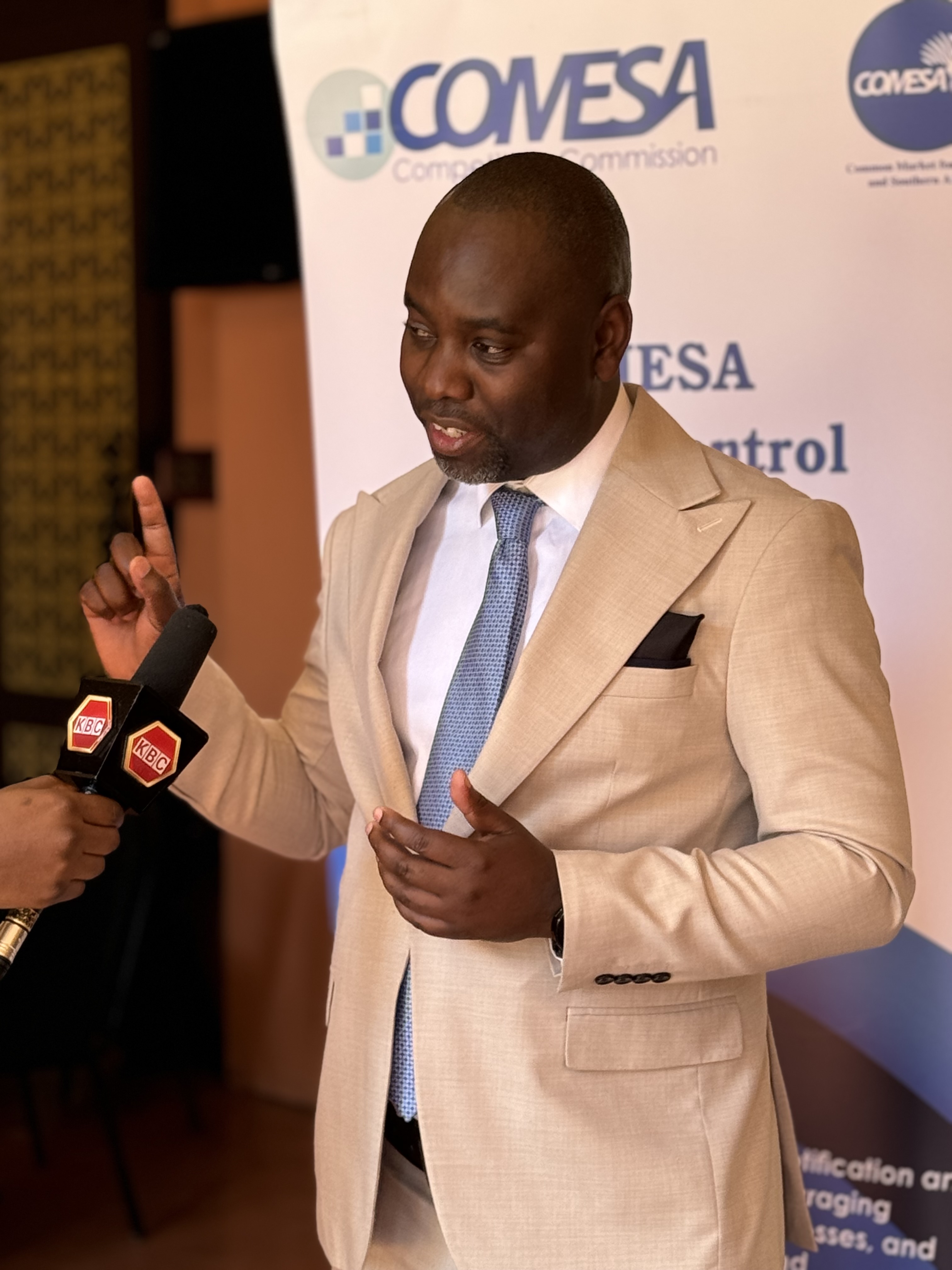
Dr. Mwemba being interviewed by KBC

Merger Regulation

As both the past Director (Dr. George Lipimile) and the current CEO (Dr. Willard Mwemba) highlighted: the Commission does not exist to prohibit mergers.  Instead, its purpose, from a merger-control perspective, is to ensure that any deals that may distort competitive markets is structured in such a way that the distortion ceases to exist or risk to the functioning of effective markets.

Answering one of the questions posed by africanantitrust.com, Dr. Mwemba confirmed that the Commission is continually engaged in ex post analysis and reviews of past mergers that were approved, sometimes with conditions, by the then-triple-C. In the ATC/Eaton Towers case, for example, it observed that the parties were found not to be complying with the obligations imposed by the contingent approval decision, therefore resulting in fines imposed by the CCC post-closing of the approved deal.

Beyond Mergers: Anti-Competitive Practices

The Commission has moved on from being a pure merger regulator long ago, however. This was a key theme throughout the multi-day conference.  “We have moved on from just doing mergers, and have now been covering the terrible, always-hidden, and always-nefarious, anti-competitive practices found across the region for years,” says Dr. Mwemba about the more than 45 ACP matters the agency has handled so far.  Case examples he gave in this respect include the CAF licensing of football rights (a veritable trilogy of matters at all levels of the intellectual property distribution chain regarding an important pastime in Africa, soccer).

Other instances of the CCC pursuing anti-competitive practices within the region include multiple investigations into the beer and alcoholic beverage markets, and a now concluded case against Uber (resulting in significant changes to the ride-sharing company’s contract terms in the COMESA region, namely removing a denial of vicarious liability clause, changing the choice of law provision from the Netherlands to local jurisdictions in COMESA, as well as changing the pricing and termination of services provisions of the contract of adhesion that Uber utilizes in its app.).  Finally, the agency is deeply engaged in ongoing agricultural and food price studies, which will likely yield further enforcement actions going forward, in the words of the CCC.

Closing Thoughts: Due Process, Procedural Rights, and Deepening Collaboration with NCAs

Even though one of the identified CAF cases remains pending on appeal, Dr. Mwemba said that the Commission welcomes the parties’ exercise of their due process rights, noting that the CID review and appellate process provide valuable insights and that everyone stands to gain by the recognition and exercise of such due process under the rules and the law.  Indeed, appeals have increased from just 1 in 2023 to 3 in 2024. The Commission also provided statistics on the collaboration it engages in with national competition authorities, including capacity building in Mauritius, the Democratic Republic of Congo, Uganda, and other member states.  Finally, the statistics provided for the past 11 years show the transformation of the early period (which AAT had initially covered graphically for several years with its informal merger-stats analysis, now long-abandoned due to the CCC’s improved transparency and web presence): The CCC has handled over 430 merger reviews and more than 45 anti-competitive practice investigations.

Honoring ongoing excellence and recognizing past accomplishments